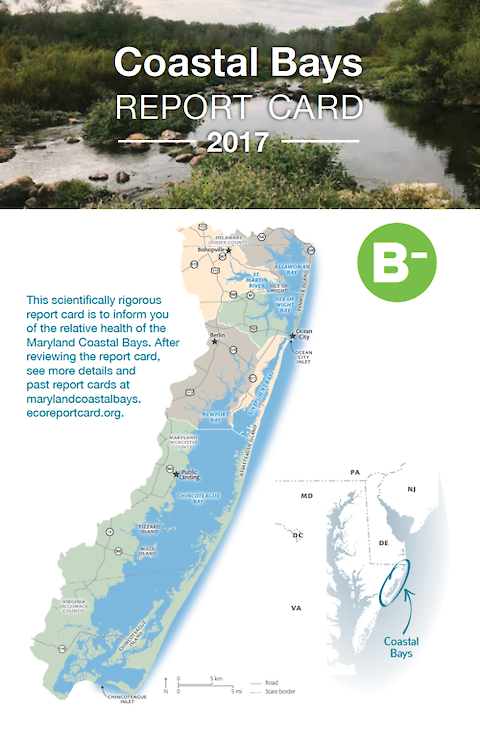
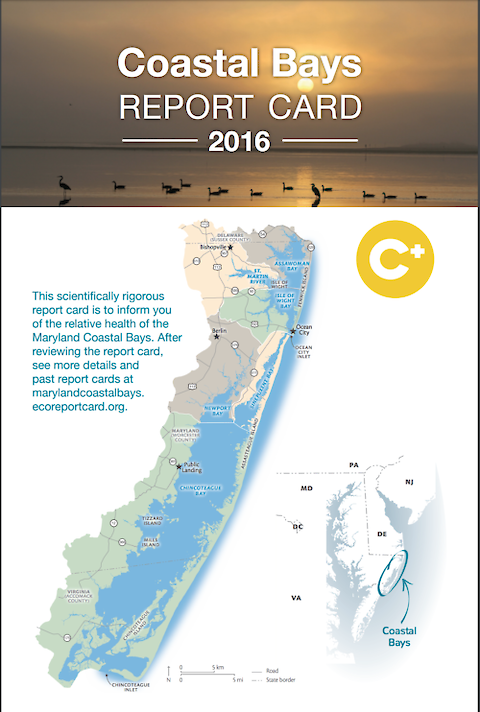
On 20 September 2018 on Fager’s Island, Ocean City, MD, the tenth annual Maryland Coastal Bays report card was released. The Integration and Application Network, University of Maryland Center for Environmental Science (IAN UMCES) has been partnering with the Maryland Coastal Bays Program, Maryland Department of Natural Resources, and the National Park Service to produce report cards for the coastal lagoons that separate Fenwick and Assateague Islands from the mainland.
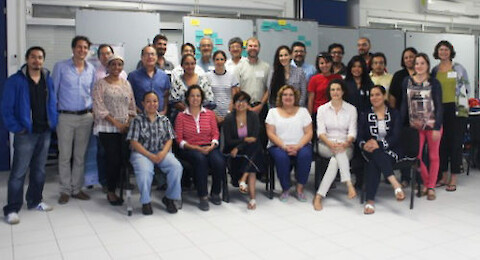
It makes me cringe a little to remember the debriefing that followed our May workshop on the Everglades report card project. The IAN team was complimented for keeping the project on track. “Great job at herding cats,” they said, referring to our ability keeping a meeting of scientists on track. There was just one loose thread that needed to be tidied up. But, then the “cats” got hold of it, and for a moment it seemed that things might unravel.
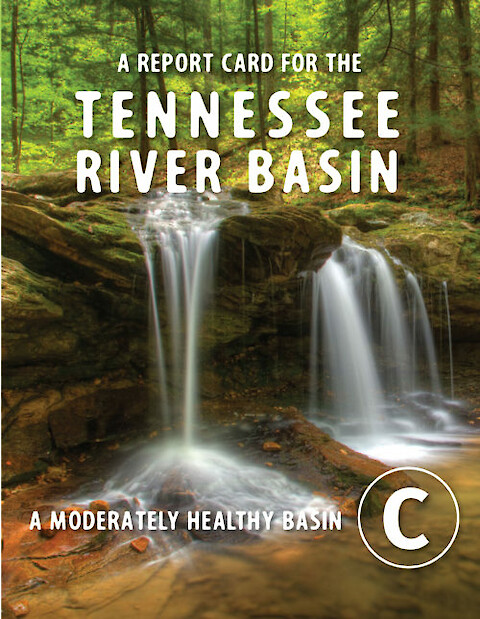
The Tennessee River Basin Report Card was released in February this year. It was made possible in large part because of feedback the IAN team solicited during the Tennessee River Basin Planning Network (TRBN) meeting in Chattanooga, Tennessee in August, 2017. Discussions we had at that meeting decided several issues related to the report card scope and detail that carried through to the finished product.
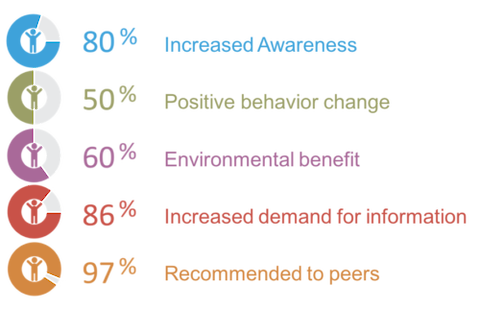
The Healthy Rivers for All Partnership spent some quality time last week brainstorming about how our report card projects are perceived. We take it for granted that the report card process increases engagement and leads to great outcomes. We talk about how great report cards are all the time, and we believe it! Positive outcomes are documented through a comprehensive survey of groups that have completed a report card process.
The first Yucatán Coast Report Card was released in April 2018, the culmination of almost 2 years of work by our colleagues at Laboratorio Nacional de Resiliencia Costera (LANRESC), in Sisal, Yucatán Mexico. The project kicked off with a stakeholder workshop that Jane Hawkey and I helped facilitate in August 2016. The long-term collaboration has made this report card release especially exciting.
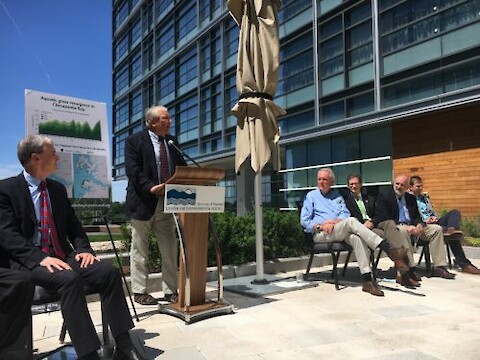
We held a press conference for the release of the 2017 Chesapeake Bay report card on 15 June 2018 on the Potomac River. We used the Hyatt Hotel as the press conference venue in a new development on the Wharf area of Washington, D.C. It was a great venue in that it showcased the social and economic opportunities that a clean waterway can afford. There were new water taxis plying the river, floating wetlands alongside a nice pier, and lots of restaurants and pubs along the waterfront.
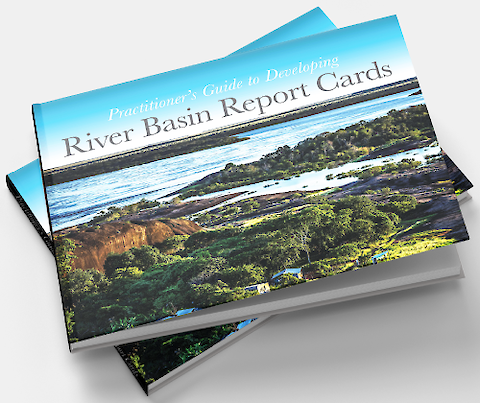
We recently completed our course entitled: "Healthy Rivers for All: Setting the course for sustainability with river basin health report cards". The course was co-taught by Heath Kelsey, Simon Costanzo and me, supported by Suzi Spitzer, our excellent teaching assistant. We used our recently completed book, "Practitioner's Guide to Developing River Basin Health Report Cards," as the textbook. Our lectures were based on content in our newly-published Practitioner's Guide.
The 2016 report card for the Maryland Coastal Bays was released on December 16th, 2017, at the Ocean City Marlin Club. The report card release was combined with the annual Gold Star Awards banquet. This event was scheduled a little later than usual due to some data processing holdups. In addition, aerial surveys of seagrasses could not be conducted in the summer of 2016 due to bad weather conditions.
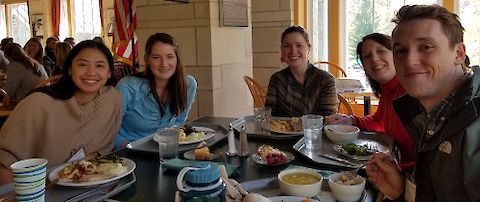
Last month, several IAN staff members traveled to the National Conservation Training Center in Shepherdstown, West Virginia, to attend the Chesapeake Watershed Forum. The Forum is an annual regional conference hosted by the Alliance for the Chesapeake Bay. This year IAN was represented by Caroline, Emily, Dylan, Vanessa, and Suzi. The 2017 conference theme was Healthy Lands, Healthy Waters, Healthy People.
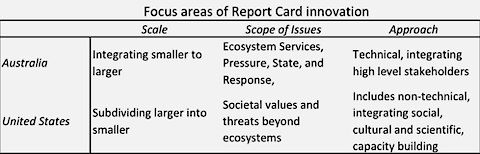
My perceptions about where innovations in report cards are heading in Australia and the US. The foundations of these report cards are similar, but influences have caused the two groups to go in slightly different directions. Both appear to be very valuable. Image credit Heath Kelsey … The report cards developed from each group have common characteristics, but focus on different strengths.