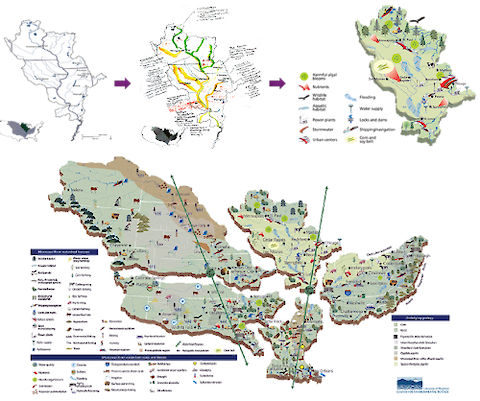
Anthony Kung wrote an interesting blog entitled “Conceptual diagrams or conceptual diagramming? Creating diagrams as a tool for stakeholder collaboration” which was posted on the Newsdrop enewsletter of the International Water Centre. Anthony recently spent 8 months embedded at the University of Queensland. His insights into the conceptual diagramming process were both thoughtful and thought-provoking.
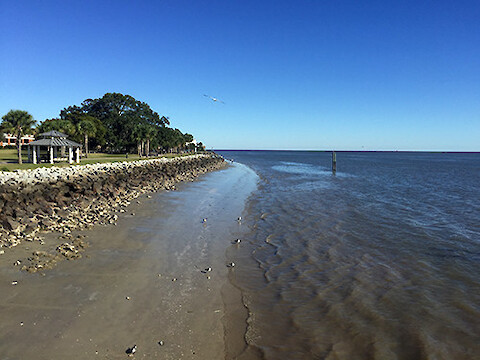
The Coastal Georgia Ecosystem Report Card was released November 13th, in Brunswick, Georgia. Heath Kelsey and I traveled to Georgia for the release event, which included both a media talk and a more detailed technical talk on the report card results. Coastal Georgia has a huge tidal range, as seen in this photo from St. Simon’s Island. This was one of the many things discussed in production of the report card.
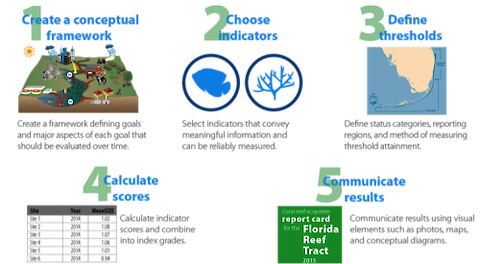
Jane Thomas, Caroline Donovan, and I visited Ft. Lauderdale, FL to facilitate a workshop for the development of the Pilot Report Card for the Florida Reef Tract with our partners from NOAA's Coral Reef Conservation Program. The workshop and report card was a follow-up to the workshop for creation of the pilot report card for American Samoa.
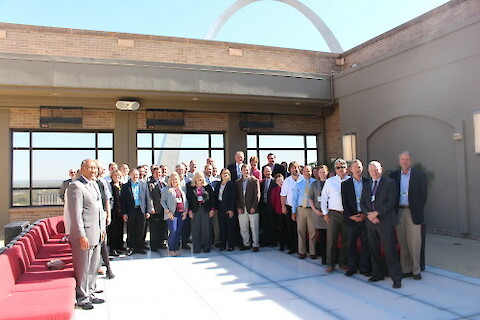
On October 14, 2015, in St. Louis, Missouri, I unveiled the Report Card for the Mississippi River Watershed, a project that almost everyone on the IAN Science Communication team has worked on at some point since 2012. The event was on the roof top patio of at the Hyatt Regency at the Arch in Downtown St. Louis, with great views of the river and the St. Louis Arch.
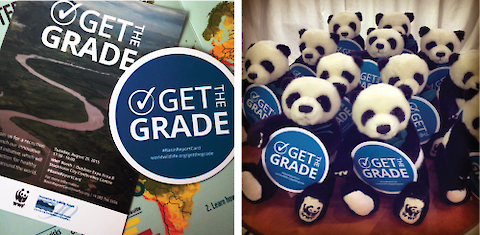
This blog is part of the Basin Report Card Initiative: a partnership between the World Wildlife Fund (WWF) and the University of Maryland Center for Environmental Science (UMCES) Our partnership with the World Wildlife Fund (WWF) was officially launched at World Water Week this past August 2015. This new partnership aims to widen the audience and uptake of report cards as an environmental management tool for river basins around the world.
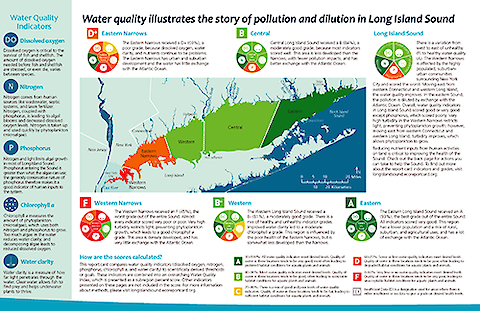
Caroline Donovan and I were invited to speak at the joint meeting of the Long Island Sound’s Citizens Advisory (CAC) and Science and Technical Advisory Committees (STAC). After completing the Long Island Sound Report Card in June, they asked us to give some wrap up and next steps information for where the report card is going in the future. Overall, the Long Island Sound report card included water quality, human health, and ecosystem/habitat indicators.
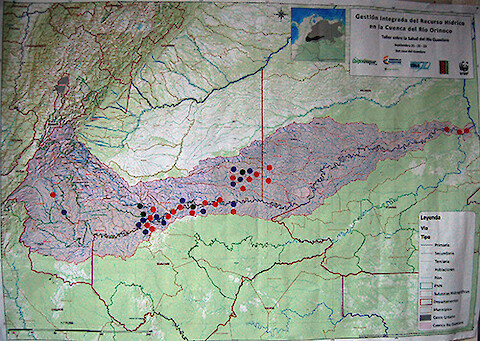
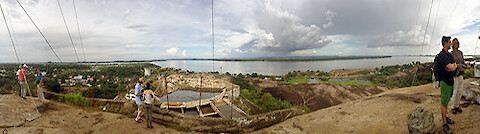
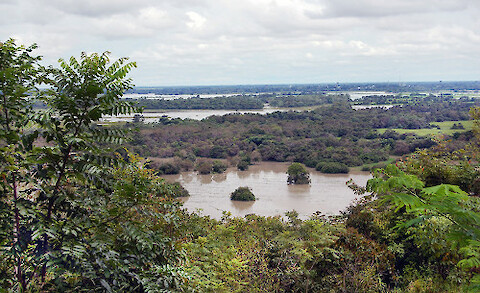
This blog is part of the Basin Report Card Initiative: a partnership between the World Wildlife Fund (WWF) and the University of Maryland Center for Environmental Science (UMCES) On September 21st, 2015, Simon Costanzo and I traveled to San Jose de Guaviare, Colombia for the Guaviare River Report Card Workshop. This was the third workshop in Colombia to develop report cards for three tributaries of the Orinoco River.
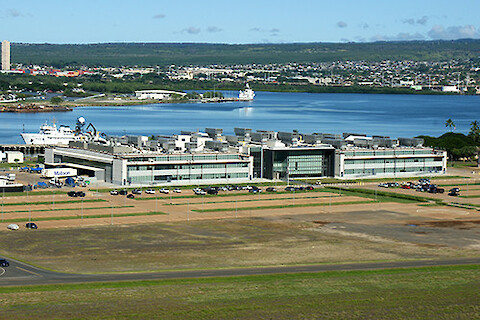
Heath Kelsey, Caroline Donovan, and I traveled to Honolulu, Hawaii to conduct a workshop to kick off the development of a report card for the coral reefs of American Samoa.
This blog is part of the Basin Report Card Initiative: a partnership between the World Wildlife Fund (WWF) and the University of Maryland Center for Environmental Science (UMCES) On August 9th, 2015, Simon Costanzo and I traveled from Bogota, Colombia to Puerto Carreño, Vichada, Colombia for the Bita River Report Card Workshop. This was the second of three workshops that will occur in Colombia, to develop report cards for three tributaries of the Orinoco River.
This blog is part of the Basin Report Card Initiative: a partnership between the World Wildlife Fund (WWF) and the University of Maryland Center for Environmental Science (UMCES) On June 29th, 2015, Simon Costanzo and I traveled from Bogota, Colombia to Puerto Lopez, Colombia for the Meta River Report Card Workshop. The workshop spanned from June 30th-July 2nd, and was the first of three workshops that will occur in Colombia, to develop report cards for three tributaries of the Orinoco River.